AC Repair Troubleshooting: Common Problems and Solutions
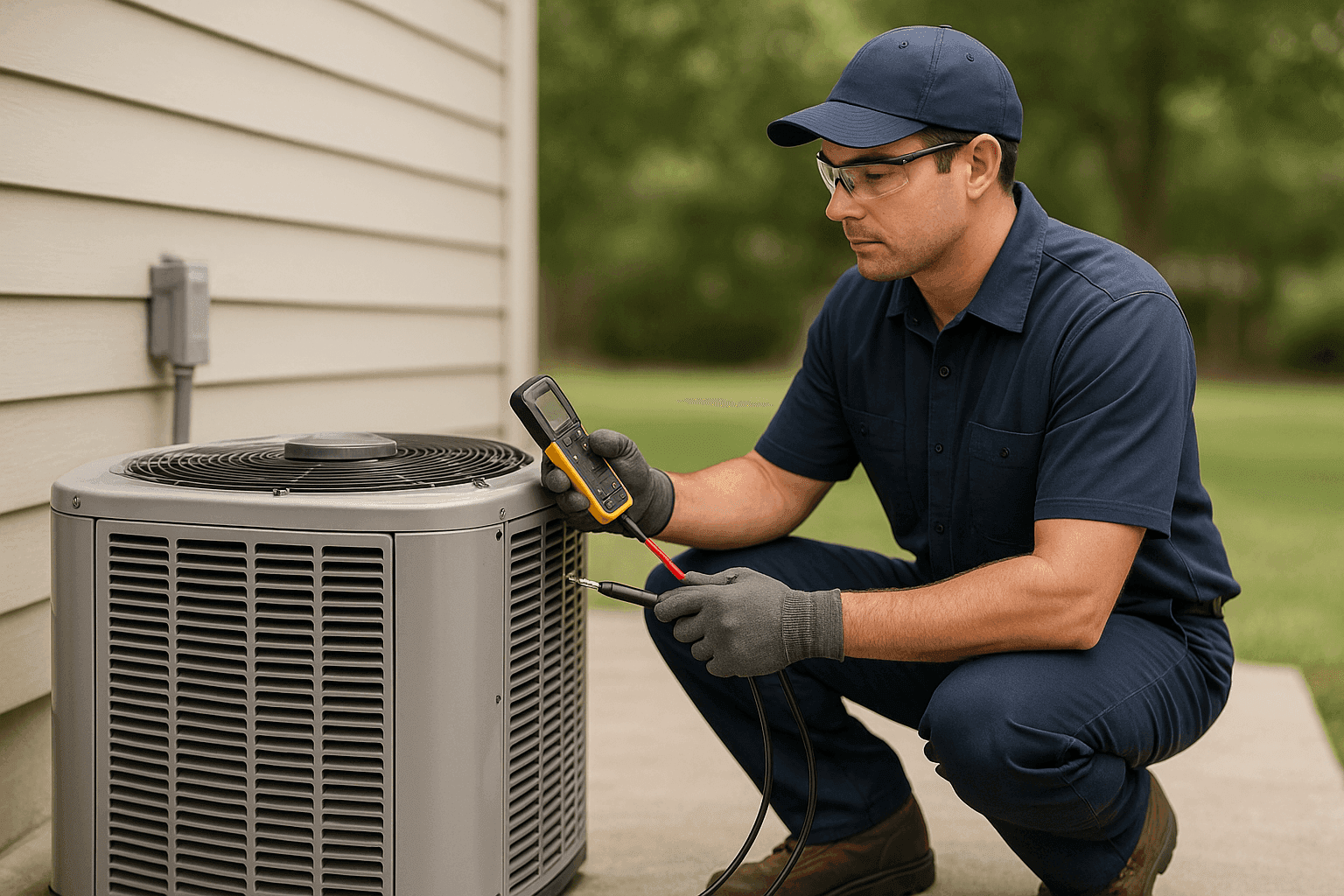
Is your AC suddenly blowing hot air? Maybe it’s making odd noises in the middle of the night, or you’ve spotted a puddle under the unit. These problems can turn a regular day upside down—fast.
At Holmes Heating & Air, we've seen it all. With decades of hands-on experience in HVAC, we know how unsettling it feels when your comfort is on the line. This guide breaks down what to look for, what you can do yourself, and when it’s time to call in the pros.
Unit Not Cooling 🥵
One of the most common complaints: “My AC is running, but the house is still hot.” Before panicking, check these basics:
- Thermostat Setting: Is it set to “cool”? Sometimes, the switch is in the wrong spot. Set the temperature lower than the current room temp.
- Air Filter: A clogged filter chokes the system. It’s like trying to breathe through a scarf. Check your filter—if it’s gray and fuzzy, swap it out. See our filters service for more.
- Breaker Switch: If the breaker tripped, your AC might not have power. Flip the switch off, then back on.
- Vents: Are they open and unblocked? Furniture, drapes, or boxes can block airflow.
If these steps don’t help, you may have a deeper issue—like low refrigerant, a failing compressor, or a frozen coil. That’s when you’ll want a licensed HVAC technician.
Strange Noises from the AC Unit 🎵
ACs should hum—not bang, clank, or screech. Odd sounds are warning bells:
- Rattling: Loose panels or screws.
- Buzzing: Electrical issues or debris near the fan.
- Squealing: Belt problems (more common in older units).
- Hissing: Possible refrigerant leak—a safety concern.
You can tighten accessible screws or remove visible debris. But if the noise persists, shut off the unit and call an HVAC pro. Some noise signals—like hissing—can mean a leak, which is regulated by EPA guidelines for refrigerants.
Leaking Water or Moisture Issues 💧
ACs pull moisture from the air, but you shouldn’t see water pooling around your unit.
- Condensate Drain: This channel can clog with algae or dirt, backing up water. Carefully clear the line with a wet/dry vacuum if you’re comfortable.
- Frozen Coil: If your AC ices up, it can melt and overflow. Dirty filters or low refrigerant are common causes.
Standing water near electrical equipment is risky. If you notice persistent leaks, turn off the unit and call for professional service. Water damage can lead to mold and expensive repairs.
Quick Safety Checklist
Before you do anything, safety first:
- Turn off power at the breaker before opening panels.
- Never handle refrigerant or electrical repairs yourself.
- Use gloves and eye protection if clearing drain lines.
- If you smell burning wires or gas, leave the area and call emergency services.
Refer to local code requirements or the National Fire Protection Association (NFPA) safety tips when in doubt.
What You Can Fix Yourself vs. When to Call a Pro
Some issues are as easy as swapping out a lightbulb; others, not so much. Here’s a quick guide:
DIY-Friendly:
- Replacing disposable air filters every 1-3 months.
- Making sure vents are open and not blocked.
- Checking thermostat batteries and settings.
- Clearing leaves or debris from around outdoor units.
Call an HVAC Technician for:
- Electrical issues (unit won’t turn on, breaker keeps tripping).
- Refrigerant leaks or recharging.
- Frozen coils or persistent water leaks.
- Unusual smells (burning, chemical, musty odors).
- Loud or worsening noises.
Not sure? When in doubt, it’s safer—and cheaper in the long run—to get a professional diagnosis. Visit our ac-maintenance service page for more about what we offer.
What Pros Do on Arrival
When you call Holmes Heating & Air, here’s what you can expect:
- Assessment: A technician will listen to your description, then inspect the thermostat, filters, and visible components.
- Diagnostics: Using gauges and instruments, we’ll check refrigerant levels, electrical connections, and system pressure.
- Testing: We’ll run the system through a cycle to spot hidden issues.
- Recommendations: After diagnosing, you’ll get a clear explanation of the problem and options for next steps—no jargon, just facts.
Technicians follow industry standards from organizations like the Air Conditioning Contractors of America (ACCA) and the EPA for refrigerant handling.
Prevention & Regular Maintenance
The best AC repair is the one you never need. Annual checkups can extend the life of your system and catch minor issues before they snowball.
- Change filters regularly—monthly during heavy use.
- Clear leaves and debris from around outdoor units.
- Schedule annual professional maintenance (spring is ideal).
- Ask about air balancing and duct cleaning to keep air flowing smoothly.
- Consider a programmable thermostat for more efficient temperature control.
We offer comprehensive maintenance for everything from Mini-Splits near you to traditional central air systems.
Costs & Time Factors
Repair costs and time can vary based on the problem:
- Simple Fixes: Replacing a filter or resetting a breaker—minutes.
- Moderate Repairs: Clearing a drain line or replacing a thermostat—under an hour.
- Complex Repairs: Refrigerant leaks, electrical issues, or major parts—several hours and the cost of parts.
Regular maintenance can help you avoid surprise expenses and save on energy bills.
When It’s an Emergency
Sweltering summer night with no cool air? Water gushing from the AC? Some problems can’t wait:
- Complete loss of cooling during extreme temperatures.
- Water leaks near electrical panels.
- Burning or chemical smells from vents.
- Sudden, persistent loud noises.
We offer 24 Hour Emergency Service. Don’t hesitate if you think your safety or property is at risk.
FAQ
Q: How often should I change my AC filter?
A: Every 1–3 months, depending on usage and pet presence.
Q: Why is my AC freezing up?
A: Often caused by dirty filters, airflow issues, or low refrigerant. Try replacing the filter—if freezing continues, call for service.
Q: Can I add refrigerant myself?
A: No. Handling refrigerant requires EPA certification for safety and legal reasons.
Q: Does my AC need annual maintenance?
A: Yes. Professional maintenance not only prevents breakdowns but also keeps your system efficient and safe.
Local and Seasonal Considerations
AC problems spike when the weather swings—especially in early summer and deep heat waves. Dust and pollen can clog filters quickly in busy seasons. If you’re in a high-humidity area, keep an eye out for musty odors or increased condensation.
If you’re searching for AC Repair help in East Palo Alto, California, we’re only a call away.
A comfortable home or business starts with a reliable HVAC system. If your AC is acting up, don’t wait for a minor issue to become a major headache. Call Holmes Heating & Air now — or reach us anytime at 888-835-0228 .