Furnace Repair: DIY Fixes, Professional Solutions & Safety Tips
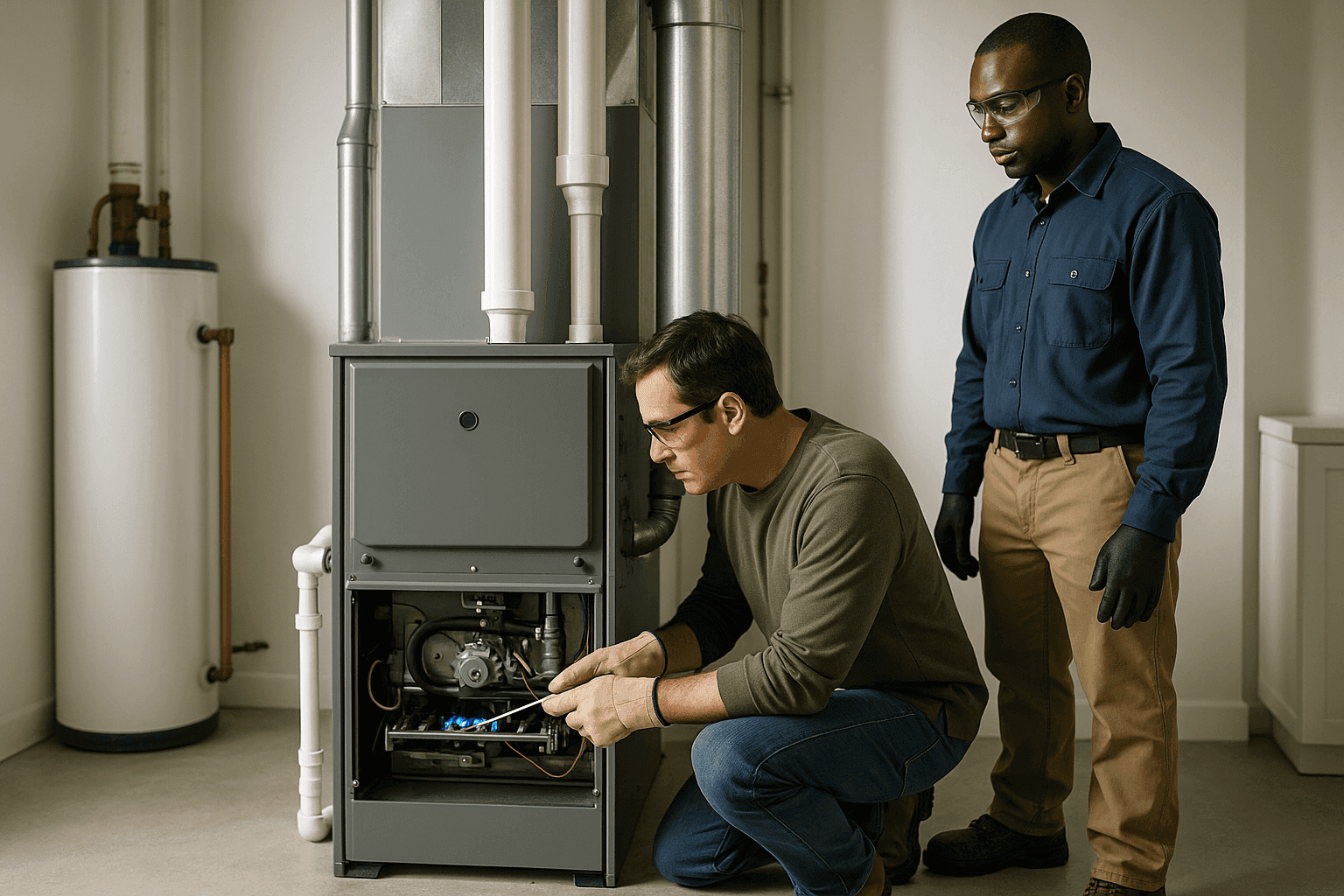
Is your furnace blowing cold air on a freezing night? Or maybe it’s suddenly silent, leaving you wrapped in blankets, staring at the thermostat. We’ve all been there. At Holmes Heating & Air, we know how stressful furnace breakdowns can be—especially when every minute without heat feels like an hour.
Let’s break down which furnace issues you can fix yourself, which ones are best left to certified HVAC technicians, and how you can stay safe and warm all season long. Your comfort—and safety—are always the top priority.
Common DIY Furnace Fixes (And When to Try Them) 🛠️
Not every furnace hiccup means you need to panic or call for help. Sometimes, it’s as simple as a reset or a quick filter swap. Think of these DIY fixes as changing a light bulb or resetting a tripped breaker—simple, safe, and fast.
1. Check the Thermostat
- Make sure it’s set to “HEAT” and the temperature is above room temp.
- Replace batteries if it’s a digital model.
- Double-check the scheduling settings; sometimes “auto” can delay things.
2. Replace or Clean the Air Filter
- Dirty filters choke airflow, causing overheating or shutdowns.
- Slide out the old filter (usually from a slot near the return duct).
- If it’s gray, dusty, or you can’t see light through it, swap it for a new one.
- Check monthly—especially during heavy heating season.
3. Reset the Furnace
- Look for a power switch near the unit (it might look like a light switch).
- Flip it off, wait 30 seconds, then turn it back on.
- Some models have a reset button—consult your owner’s manual.
4. Inspect the Pilot Light or Igniter
- For older models: If the pilot is out, follow the manufacturer’s relighting instructions.
- For electronic igniters: Listen for clicking. If you don’t hear it, the igniter might need professional help.
5. Check the Circuit Breaker
- Tripped breaker? Reset it once.
- If it keeps tripping, stop and call a pro—there may be a bigger issue.
If these steps don’t bring your heat back, it’s time to consider safety and call for professional furnace-repair.
Quick Furnace Safety Checklist
Furnaces are powerful. They mix gas, high voltage, and hot components. Before you touch anything, pause and review these safety musts:
- Always shut off power at the switch or breaker before opening panels.
- Smell gas? Leave immediately and call your gas utility.
- Never block furnace vents—clear at least 3 feet all around.
- Don’t touch wiring—even “off” furnaces can hold a charge.
- Read your owner’s manual for model-specific warnings.
- Use proper filters—the wrong size can cause air leaks and dust buildup.
- Don’t use flammable sprays near your furnace.
The National Fire Protection Association (NFPA) and local codes stress caution with all heating equipment. If you’re unsure, err on the side of safety.
Warning Signs: When To Call a Pro
Not all furnace troubles are created equal. Some issues are like a loose shoelace—you can fix them yourself. Others are more like a flat tire on the highway: you need a trusted team.
Red Flags Needing Professional HVAC Repair:
- Strange smells: sulfur, burning plastic, or chemicals
- Loud banging, screeching, or grinding sounds
- No heat, even after a reset and filter change
- Pilot won’t stay lit or electronic ignition fails
- Soot, rust, or water pooling near the unit
- Furnace cycles on and off rapidly (“short cycling”)
- High carbon monoxide (CO) alarm readings
- Increased energy bills with no obvious cause
If you spot any of these, don’t risk it. Schedule a hvac-repair right away or reach out for Heating Maintenance to catch issues before they escalate.
What Pros Do When They Arrive 🧰
When our Holmes Heating & Air certified techs show up, you get more than a quick fix. Here’s what to expect:
-
Friendly Arrival
We’ll listen to your concerns. Ask about what you’ve tried. Respect your home and time. -
Thorough Inspection
We check the thermostat, electrical connections, gas lines, heat exchanger, and venting. Using specialized tools, we test for carbon monoxide and gas leaks. -
Transparent Diagnosis
We’ll explain the problem in plain language—no technical riddles. If a part needs replacing, you’ll know what it is and why. -
Professional Solutions
Genuine manufacturer-approved parts. Work done safely and according to code. -
Performance Testing
We won’t leave until the system runs smoothly. We’ll also check airflow, temperature rise, and safety controls. -
Advice for the Future
Simple tips to avoid repeat issues—like filter schedules, how to spot early warning signs, and when to schedule the next maintenance.
Our technicians are trained, background-checked, and follow current [International Residential Code (IRC)] and manufacturer recommendations.
Safety First: Carbon Monoxide, Gas Leaks & More 🚨
Furnaces can pose real risks—especially gas and CO leaks. Think of carbon monoxide as a silent shadow: you can’t smell it, can’t see it, but it can be deadly. That’s why every home with a gas furnace should have a working CO detector within 10 feet of sleeping areas.
Safety Musts:
- Test CO detectors monthly; replace batteries every 6 months.
- Never ignore a beeping or chirping alarm—evacuate and call 911.
- If you ever smell rotten eggs (sulfur), leave and call the gas company.
- Keep furnace areas clear of storage, especially anything flammable.
The U.S. Consumer Product Safety Commission (CPSC) recommends annual professional inspections for all fuel-burning appliances.
DIY vs. Call a Pro: Make the Right Call
You wouldn’t try to rewire your whole house without training. Furnace repairs—especially anything beyond filters and resets—are the same. Here’s a quick guide:
DIY-Safe:
- Thermostat battery change
- Air filter replacement
- Power switch reset
Pro-Only:
- Gas or CO issues
- Wiring or control board work
- Igniter, sensor, or blower replacement
- Repeated short cycling
- Unexplained noises or smells
If in doubt, reach out. Your safety, comfort, and time are too valuable to risk.
Prevention & Maintenance: Keep Your Furnace Strong
A well-maintained furnace is like a cared-for car—it lasts longer, runs smoother, and has fewer “breakdowns on the road.” Holmes Heating & Air recommends:
- Annual professional tune-ups (before heating season)
- Monthly filter checks and changes as needed
- Checking vents and registers for blockages
- Listening for new sounds or noticing uneven heating
Preventive service often catches small issues before they become emergencies. Need help? Our Heating Maintenance is designed for both residential and commercial customers.
Costs & Time Factors: What to Expect
Furnace repair costs and timelines vary, but here’s what usually affects them:
- Complexity: Simple fixes (filters, resets) take minutes. Major parts (blowers, igniters) can take a few hours.
- Part availability: Some components are in stock; others may need ordering.
- System age: Older units may require more labor or rare parts.
Most common repairs are handled in a single visit, but larger issues—like heat exchanger cracks—may need follow-ups.
When It’s an Emergency
Some furnace problems just can’t wait. If it’s below freezing, you have small children, elderly family, or any medical needs, don’t risk it. Holmes Heating & Air offers 24-hour emergency service, because no one should face a cold night alone.
Absolute emergencies:
- No heat and outside temps below 40°F
- Carbon monoxide alarm sounding
- Gas smell in or around your home
- Smoke or visible flames from the furnace
Call us immediately—we’ll make your safety our top priority.
FAQ: Furnace Repair Questions, Answered
Q: How often should I replace my furnace filter?
A: Check monthly and replace at least every 1–3 months during heavy use.
Q: What’s the average furnace lifespan?
A: With regular maintenance, most last 15–20 years.
Q: Can I fix a furnace ignition problem myself?
A: Relighting a pilot is possible if you follow instructions, but persistent ignition issues need a technician.
Q: Why does my furnace keep shutting off?
A: It could be a dirty filter, thermostat issue, or overheating—a tech can pinpoint the exact cause.
Local & Seasonal Considerations
Furnace breakdowns don’t care about your schedule. In Laplace, Louisiana, sudden cold snaps can catch anyone off guard. That’s why seasonal checkups and quick access to Furnace Repair near me in Laplace, Louisiana matter. We know local codes, weather patterns, and common system types—because your neighborhood is our neighborhood, too.
Need heat—fast, safe, and reliable? Call Holmes Heating & Air now — or reach us anytime at 888-835-0228 . Stay warm, stay safe, and let us handle the rest.