How to Prepare Your HVAC System for Severe Weather Events
When a storm is brewing, your mind races—windows, food, power. But your HVAC system? It’s the silent engine in your home or business, and severe weather can grind it to a halt. At Holmes Heating & Air, we know how quickly a hurricane, blizzard, or summer heatwave can turn comfort into chaos.
You don’t have to face the unknown unprepared. Protecting your HVAC system means less stress, fewer surprises, and a safer place for your family or customers.
Key Risks to Your HVAC System During Severe Weather ⚡
Severe weather is like a wild animal—it doesn’t care what’s in its path. HVAC systems are especially vulnerable. Here’s what to watch for:
- Flooding: Water can submerge outdoor units, short out electronics, and ruin insulation.
- Flying Debris: Branches, gravel, or even patio furniture can smash into condensers or damage ducts.
- Power Loss & Surges: Sudden blackouts or electrical spikes can fry compressors, thermostats, and circuit boards.
- Extreme Temperatures: Heatwaves stress AC units; deep freezes can crack pipes and coils.
- Blocked Ducts & Vents: Snowdrifts or dust storms can choke airflow, forcing your system to work overtime.
The National Fire Protection Association (NFPA) and FEMA both advise securing outdoor mechanical equipment and planning for backup power before storms hit.
Pre-Storm HVAC Safety Checklist
Think of this as your HVAC storm-prep toolkit—just like boarding up windows or stocking batteries:
- Shut off power: Turn off your system at the breaker if flooding or lightning is likely.
- Cover outdoor units: Use a breathable, manufacturer-approved cover to shield from debris—but never wrap in plastic.
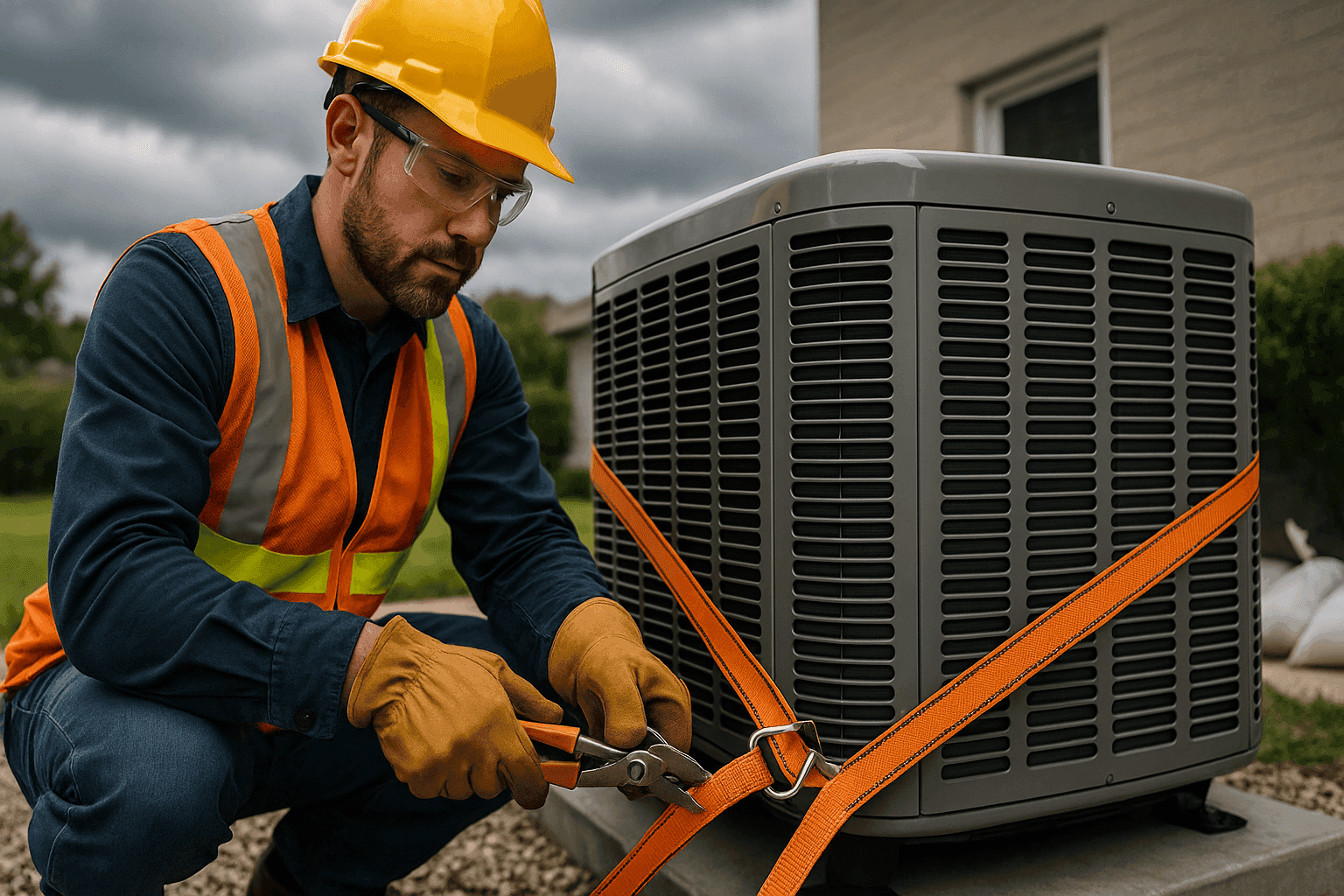
- Anchor equipment: Secure loose outdoor components and clear the area of items that could become airborne.
- Check filters: Clean or replace to maximize airflow if you lose power or need to run the system hard.
- Test generator: Make sure your backup power source is fueled, functional, and professionally maintained.
- Elevate units: If flooding is a risk, consult a pro about raising HVAC equipment above flood lines.
- Seal ducts: Inspect for leaks and gaps—especially in crawl spaces or attics, where water and critters sneak in.
- Thermostat settings: Adjust for expected conditions (warmer in summer, cooler in winter) in case of outages.
Don’t forget to keep manufacturer manuals handy. Many brands, like Lennox or Trane, offer storm-specific guidance.
Post-Storm Inspection and Recovery
When the storm passes, resist the urge to flip everything back on. First, walk through this post-event checklist:
- Visual check: Look for standing water, mud, or debris around outdoor units.
- Inspect for damage: Bent fins, loose panels, or exposed wires mean it’s time to call a technician.
- Smell test: Any burning odor or musty dampness? Leave the system off and call for professional help.
- Replace filters: Even a quick storm can clog filters with pollen, dust, or soot.
- Check ductwork: Listen for hissing air or rattling—signs of punctures or dislodged joints.
- Test generator: If used, inspect oil, fuel, and battery levels before the next storm.
For commercial properties, refer to your building’s mechanical safety plan and always document damage for insurance purposes.
Generator and Surge Protection Tips
A reliable generator is like a life raft for your HVAC during blackouts. But even the best system needs care:
- Regular maintenance: Test monthly and schedule annual service. See our Generator Maintenance page for details.
- Install surge protection: Whole-house surge protectors shield sensitive electronics from sudden spikes.
- Proper ventilation: Never operate portable generators indoors. Ensure exhaust is clear and pointed away from air intakes.
- Manual transfer switch: Avoid backfeeding your home’s electrical system—this is a job for a licensed electrician.
- Fuel storage: Keep extra fuel safely stored away from heat sources, following local fire codes.
For more on safe generator use, check guidance from the U.S. Department of Energy and your manufacturer’s instructions.
DIY vs. Call a Pro: Knowing Your Limits
Some storm prep is safe for handy homeowners or business managers. But there’s a line. For anything involving wiring, gas, refrigerant lines, or complex repairs, trust a licensed, insured HVAC company like Holmes Heating & Air.
DIY tasks:
- Changing filters
- Clearing debris around units
- Adjusting thermostats
- Visual inspections
Call a pro for:
- Electrical or refrigerant work
- Duct repairs or sealing
- Generator installation or wiring
- Flooded or shorted equipment
Licensed technicians know the National Electrical Code (NEC) and local safety requirements—critical when the stakes are high.
What Pros Do On Arrival
When our team responds after a storm, we:
- Assess all outdoor and indoor HVAC components for water, impact, or electrical damage.
- Test system controls, thermostats, and safety switches.
- Check refrigerant lines, gas valves, and insulation for leaks or cracks.
- Inspect ductwork for moisture, mold, or rodents.
- Confirm generator function and surge protection.
We document everything and recommend repairs based on years of field experience, not guesswork.
Prevention & Ongoing HVAC Maintenance
Storm prep isn’t just a one-time event. Regular HVAC Maintenance helps your system weather whatever comes its way.
- Annual tune-ups catch problems early—loose panels, weak capacitors, clogged drains.
- Filter changes keep airflow strong and indoor air clean. See our Filters page for tips.
- Duct cleaning removes debris that can ignite or block air movement.
- Thermostat upgrades improve efficiency and remote control.
- Energy audits identify weak spots in insulation, sealing, and equipment placement.
For regional guidance, check the EPA’s Energy Star recommendations on storm-resistant HVAC installation.
Costs & Time Factors
Every storm and every system is different. Minor filter changes or debris removal may take minutes. Full inspections, duct repairs, or generator work can take hours or require return visits. Material and labor costs depend on damage severity, equipment age, and parts availability.
What’s certain? Investing a little time now saves a lot later—no one likes surprise bills or days without heat or AC.
When It’s an Emergency
Sometimes, you can’t wait. Flooded equipment, sparking wires, or carbon monoxide alarms mean it’s time to call for 24-hour emergency service. Holmes Heating & Air is licensed, insured, and ready to respond—day or night.
If you ever smell gas, hear popping noises, or see smoke, evacuate and call emergency services first.
FAQ: Severe Weather & HVAC
Q: Should I turn off my HVAC before every storm?
A: If high winds, lightning, or flooding are forecast, shut it off at the breaker to protect sensitive components.
Q: Is duct tape safe for emergency duct repairs?
A: No. Use HVAC-rated foil tape for a temporary fix, but always schedule a pro inspection after the storm.
Q: How often should I replace filters after a storm?
A: Replace right after the storm passes—then again in a few weeks if you notice dust, odors, or reduced airflow.
Q: Will my warranty cover storm damage?
A: Some manufacturers cover “Acts of God,” but most require documented, professional maintenance or specific installation steps.
Local & Seasonal Considerations
Colorado blizzards, Gulf Coast hurricanes, Midwest tornadoes—each season brings its own threats. If you’re searching for HVAC Maintenance near Fort Collins, Colorado, know that our team understands the local risks and building codes.
Ask about:
- Snow shields and wind barriers for outdoor units
- Flood elevation for low-lying properties
- Smart thermostats for remote monitoring during travel or evacuation
Stay alert to weather bulletins and always follow local emergency advisories.
No matter the forecast, you can take charge and lessen the impact of severe weather on your HVAC system. Holmes Heating & Air is here for you—before, during, and after the storm.
Call Holmes Heating & Air now — or reach us anytime at 888-835-0228 .