Radiant Heating Explained: Benefits, Costs & Installation Tips
Is your home or workspace always chilly near the floor—even when the thermostat says it shouldn’t be? Maybe you’re tired of the noise and dust from forced air. Or perhaps you’re building new and want real, lasting comfort. At Holmes Heating & Air, we know how choosing the right heating system can feel overwhelming. If you’re curious about radiant heating, you’re not alone.
Radiant heat can turn a cold, unwelcoming room into a cozy retreat. But is it the right solution for your needs? Let’s break down how radiant heating works, its benefits, costs, and what you need to know about installation—so you can make the best decision for your home or business.
How Radiant Heating Works
Picture stepping onto a sun-warmed driveway. The warmth rises right into your feet—no blowing air needed. That’s the magic of radiant heat. Rather than heating the air, it warms surfaces (floors, walls, even ceilings) and objects, which then gently radiate heat throughout the space.
There are two main types of radiant heating systems:
- Hydronic Radiant Heating: Uses hot water pumped through tubes under floors or inside walls. The water is heated by a boiler (gas, electric, or even geothermal). This is the most common and energy-efficient option for larger spaces.
- Electric Radiant Heating: Uses electric cables or mats that heat up when powered. These are often installed under tile or stone floors and are ideal for smaller areas like bathrooms or kitchens.
Both systems create even, consistent warmth. No cold spots. No gusty drafts. And best of all, silent operation.
Pros & Cons: Comfort, Efficiency, and Air Quality 🛋️
Why Homeowners and Businesses Love Radiant Heat
- Ultimate Comfort: Warmth starts at your feet and rises slowly, making rooms feel cozy without overheating.
- Energy Efficiency: Radiant systems can often run at lower temperatures than forced air, reducing energy use. According to the U.S. Department of Energy, radiant heating is typically more efficient than baseboard or forced-air heating.
- Clean Air: No blowing air means less dust, pollen, or pet dander circulating. This is great for allergy sufferers.
- Quiet: No noisy fans, rattling vents, or whooshing sounds.
Challenges and Considerations
- Upfront Cost: Installation, especially in existing homes, can be higher than standard furnaces or heat pumps.
- Slower Response: Radiant systems heat up and cool down more gradually. Not ideal if you want instant heat.
- Flooring Choices Matter: Some floor coverings (like thick carpet) can reduce effectiveness.
- Repairs Require Access: Fixing leaks in hydronic systems can mean lifting flooring.
Cost Factors: What Impacts the Price?
Installing radiant heating is an investment, and several factors play into the final cost:
- Type of System: Hydronic is usually more expensive to install than electric, but cheaper to operate for larger areas.
- Size of Area: More square footage means more materials and labor.
- Retrofitting vs. New Construction: Installing radiant heat in a new build is simpler (and cheaper) than retrofitting an existing space.
- Flooring: Removing and replacing flooring adds to the labor.
- Energy Source: Gas, electric, or alternative energy (like geothermal) all have different price points.
As a rough guideline, radiant floor heating can range from $10–$25 per square foot for installation, depending on the above factors. Always include permitting, design, and inspection costs in your budget.
Radiant vs. Forced Air: The Real-World Difference
Forced air systems—your typical furnace and ducts—push heated air through vents. This can mean uneven temperatures, noise, and dust. Radiant heating, by contrast, heats you directly, like the sun on your skin.
Quick comparison:
- Radiant: Even, silent heat. No air movement. Ideal for allergy-sensitive spaces.
- Forced Air: Quick to heat, easier to retrofit, doubles as A/C ductwork. Can be noisy and spread allergens.
Which is right for you? For many, combining systems works best: radiant heat for main living areas, forced air for bedrooms or where A/C is needed.
Where Radiant Heating Shines: Best Spaces for Installation
Some areas truly benefit from radiant heating:
- Bathrooms, kitchens, and entryways—where cold tile is common
- Living rooms and family rooms with large windows
- Basements and lower levels prone to chill
- Open-plan offices or retail spaces
- Workshop or warehouse floors for commercial spaces
Homes with high ceilings or lots of glass (where warm air tends to rise and escape) often find radiant heat keeps the living zone comfortable without waste.
Residential and Commercial Considerations 🏠🏢
For Homeowners
Radiant systems can be installed in single rooms or throughout an entire home. New builds are easiest, but retrofitting is possible—especially during major renovations.
For Commercial Properties
Radiant floor heat is ideal for spaces with high ceilings or lots of door traffic (think restaurants, warehouses, yoga studios). It’s also popular in green building projects, where energy efficiency and air quality matter.
Code compliance is essential in both cases. Always work with licensed professionals who follow local and national mechanical codes, as required by the International Code Council (ICC) and state guidelines.
The Installation Process: What to Expect
1. Design & Planning
Every radiant heating project starts with a detailed assessment. Holmes Heating & Air reviews your building plans, insulation, energy needs, and flooring. We calculate heat loads, choose the right system, and develop a layout that avoids cold spots.
2. Permitting
Permits are almost always required. We handle the paperwork, coordinate with local building departments, and schedule inspections at key milestones.
3. Installation Steps
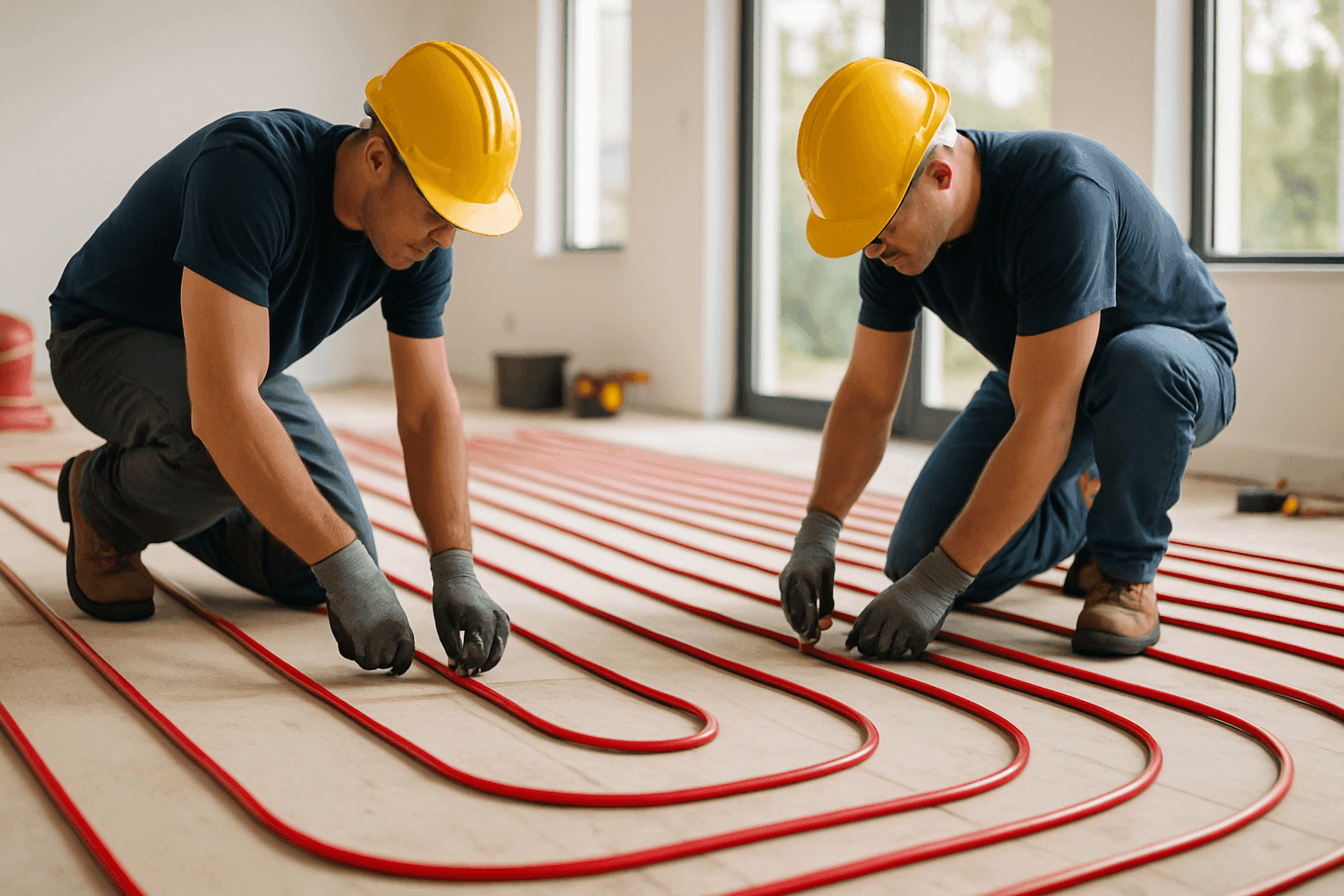
- Hydronic: PEX tubing is laid out in carefully spaced loops. Manifolds are installed, then the tubing is pressure-tested for leaks. Concrete or another suitable floor is poured over the tubes, or they’re embedded in a subfloor system.
- Electric: Heating cables or mats are installed directly under the finished floor. These systems are tested before and after flooring is laid.
4. System Integration
For hydronic systems, boilers, pumps, and controls are installed and connected. Electric systems get dedicated thermostats.
5. Inspection & Startup
Before the system runs, inspectors verify safety and code compliance. We then test everything—so you enjoy reliable, safe heat from day one.
Tip: Always ask your installer for documentation on your system, including as-built layouts and warranty info.
Practical Tips for Choosing Radiant Heating
- Assess your insulation. Radiant heat works best in well-insulated spaces.
- Plan for future flooring choices. Some materials conduct heat better than others.
- Consider combining radiant with Mini-Splits near you for cooling or supplemental heat.
- If you have allergies, radiant systems can noticeably improve indoor air quality.
- For large commercial spaces, hydronic radiant is usually most cost-effective.
Frequently Asked Questions
Is radiant heat safe for children and pets?
Absolutely. The surface temperature is warm, not hot, and there are no exposed elements. It’s a safer option than space heaters and can be a great choice for families.
Can radiant heating be zoned for different rooms?
Yes! Zoning allows different areas to be set at different temperatures, boosting comfort and energy savings.
How long does radiant heating last?
With proper maintenance, hydronic radiant systems can last 30 years or more. Electric systems typically last 20+ years. The key is quality installation and regular checkups.
Is radiant heating right for my climate?
Radiant heating works in a wide range of climates, from snowy winters to milder regions. In the Midwest, it’s a popular choice for both homes and businesses. For more info, see Radiant Heating near me in Cedar Rapids, Iowa.
Professional Installation Matters
Installing radiant heat is not a DIY weekend job. Building codes, safety, and long-term reliability depend on skilled design and workmanship. Holmes Heating & Air’s licensed installers take care of every step, from design to final inspection—so you get total peace of mind.
Ready to Explore Radiant Heating?
Whether you’re building new, renovating, or improving comfort in your workspace, radiant heating could be the upgrade you’re looking for. Have questions? Want to see if your space is a fit? We’re here to help.
Call Holmes Heating & Air now — or reach us anytime at 888-835-0228 .