Radiant Heating vs. Forced Air: Which Is Right for You?
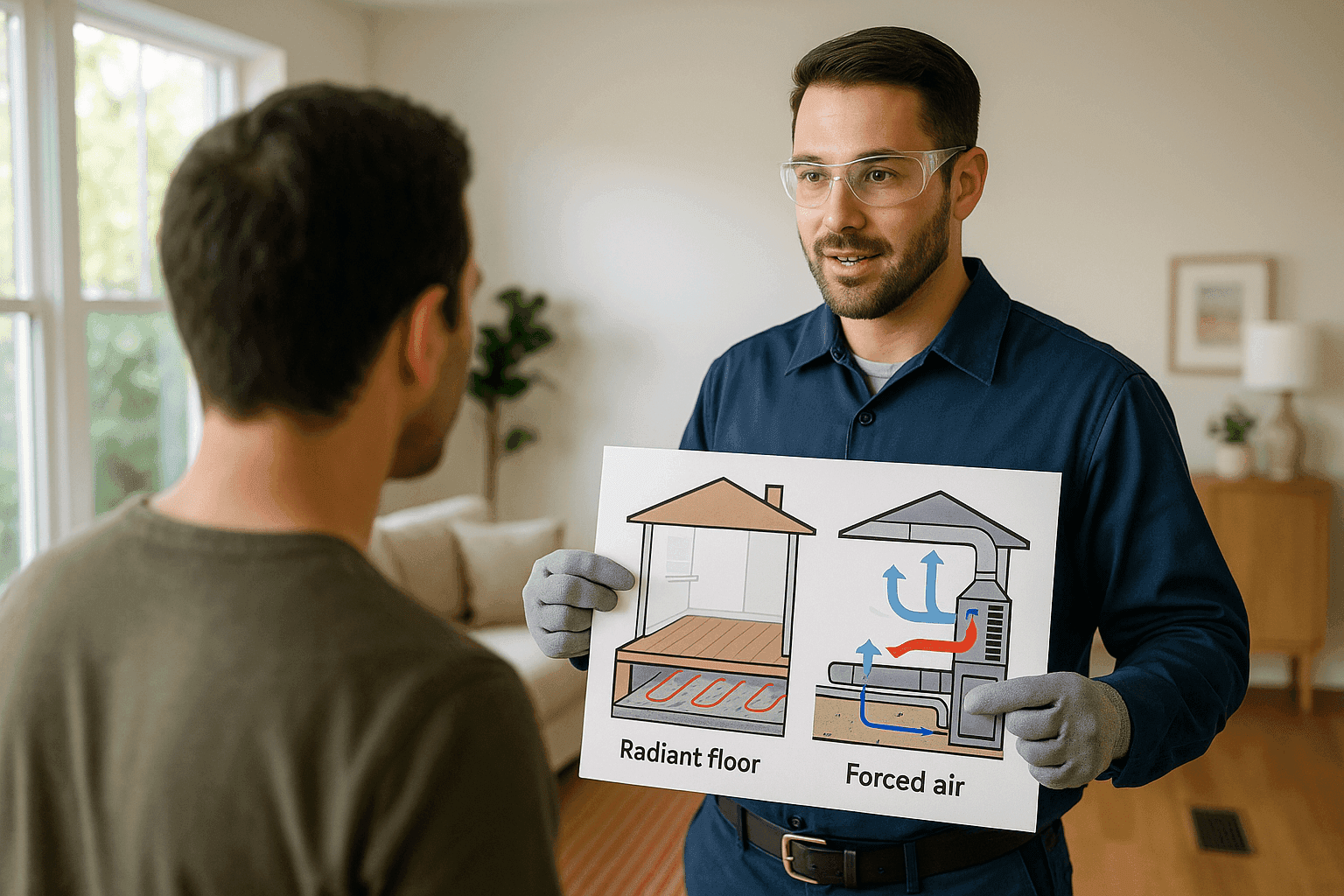
Feeling a chill in your space? Or maybe you’re tired of uneven warmth and dry air each winter? You’re not alone. Picking the right heating system for your home or business is a big decision—one that affects comfort, costs, and even your air quality for years to come.
At Holmes Heating & Air, we’ve helped thousands of families and business owners make this choice. We know the stakes are high and the options can feel overwhelming. Let’s break it down in plain language, so you can choose confidently.
How Each System Works
Both radiant heating and forced air have the same goal: to warm your space. But they take very different roads to get there.
Radiant Heating
Picture the sun on your face on a crisp, cool day. That’s radiant heat—warming you directly, not just the air around you. Radiant systems use hot water tubes or electric mats beneath your floors, or sometimes behind walls or ceilings. The heat rises gently, spreading evenly from the ground up.
- Common types: Hydronic (water-based) and electric radiant floors
- Best for: Consistent comfort, allergy-sensitive spaces, new builds or large renos
Forced Air
Now think of a hair dryer or a car heater—blowing hot air into the room. That’s forced air. These systems use a furnace (gas, electric, or oil) to heat air, then push it through ducts into every room. You feel the warmth quickly, but it can be a bit gusty.
- Common types: Central furnaces, heat pumps, packaged HVAC units
- Best for: Quick heat, easy add-ons (AC, filtration), homes with existing ducts
Comfort and Indoor Air Quality (IAQ) 🌡️
This is where things get personal. Let’s talk about how each system feels—and what you breathe.
Radiant Heating: Silent and Steady
Radiant heat is like a cozy blanket. No moving air. No cold spots or drafty corners. You can walk barefoot on a tile floor in January and still feel warm. Because there’s no fan blowing dust and dander around, radiant is a game-changer for allergies and asthma. The air stays moist—no more waking up parched.
Forced Air: Fast but Sometimes Fickle
Forced air fills rooms quickly, which feels great on chilly mornings. But it can create uneven temperatures—warm near vents, cool by the windows. The constant airflow stirs up dust, pollen, and pet hair, unless you stay on top of filter changes. Some people notice dry skin or sinus irritation, especially in winter.
Quick IAQ Tips
- Change filters every 1-3 months (forced air)
- Add a humidifier if air feels dry
- Consider IAQ testing and solutions for sensitive spaces
Installation Factors
Not all homes and buildings are created equal. Your structure, timeline, and budget all matter.
Radiant Heating: Best with New Floors
Installing radiant means putting heat tubes or cables under the floors. Perfect for new construction or gut renovations, but tricky if you’re not planning to rip up your floors. It takes time—usually days, not hours. But the result is seamless, invisible comfort.
- Works with: Most floor types (tile, hardwood, some carpets)
- May require higher floor height or slab adjustments
- Hydronic systems need a boiler; electric needs circuits
Forced Air: Works with What You’ve Got
If your home already has ducts, forced air is often the easier upgrade. New furnace or heat pump, connect to the existing network, and you’re set. Even if you’re starting from scratch, ductwork can be added to most structures. Bonus: You can add AC, filtration, and zoning later.
- Existing ducts = faster install, lower labor
- Ductless options like Mini-Splits near you for additions or retrofits
Cost and Value 💸
Let’s talk numbers. Remember, initial cost isn’t the whole story—think about long-term value, too.
Radiant Heating: Pricier Upfront, Lower Bills Later
Radiant systems cost more to install, especially hydronic (water-based) types. But they’re incredibly efficient—especially if you pair them with a smart thermostat or even a geothermal system. You’ll notice lower monthly bills and fewer cold complaints.
- Average install: Higher than forced air (varies by size and floor type)
- Maintenance: Minimal (flush system, check for leaks)
- Energy use: Lower, especially with efficient boilers
Forced Air: Lower Entry Cost, More Moving Parts
Forced air furnaces are usually less expensive to install, especially if you’ve already got the ductwork. But ducts need regular cleaning, and the system has more pieces to maintain—think blowers, filters, and thermostats.
- Average install: Lower if ducts exist; higher if new ducts needed
- Maintenance: Regular filter changes, duct cleaning, tune-ups
- Energy use: Can be high if ducts leak or are uninsulated
Pro Tip
Having a home energy audit before you upgrade helps spot leaks, drafts, and insulation gaps that impact any system’s efficiency.
Maintenance and Longevity 🛠️
A heating system is a long-term relationship. You want something reliable, safe, and hassle-free.
Radiant Heating
- Fewer moving parts mean fewer breakdowns
- Hydronic systems need water quality checks and occasional flushing
- Floor repairs can be complex if there’s a leak
Forced Air
- Blowers, belts, and electronics need annual inspection
- Ducts should be cleaned every 3-5 years (per EPA)
- Filters are easy to change (but easy to forget)
No matter your system, schedule HVAC maintenance before each heating season. It’s the simplest way to avoid surprises.
Real-World Comfort: Which Feels Better?
Some things you just have to experience. But here’s what our clients tell us, year after year:
- Radiant feels more “natural.” No whooshing air, no temperature swings.
- Forced air is fast—and flexible. Great for families who want to add AC, zoning, or air purification down the road.
- Sensitive to allergies? Radiant is a winner.
- Need quick heat or easy installation? Forced air often wins the day.
Choosing for Your Space
- New build or major renovation? Radiant is worth the investment.
- Existing ducts in decent shape? Forced air is cost-effective.
- Commercial spaces: Forced air can scale up quickly, but radiant floors are unbeatable in entryways, gyms, or open lobbies for consistent comfort.
- Historic or oddly-shaped spaces: Radiant can go where ducts can’t.
Installation: What to Expect
Whether you choose radiant or forced air, professional installation is a must. Our team at Holmes Heating & Air follows all state and local codes (see International Residential Code, Section M2103 for radiant, and M1401 for forced air). We’ll walk you through:
- Size and layout recommendations
- Energy code requirements
- Safety clearances and ventilation
- Permits and inspections
No shortcuts. Just systems built to last.
Cost & Value: What’s the Real Investment?
- Radiant: Higher up front, lower utility bills, fewer moving parts
- Forced Air: Lower initial cost, versatile, may need more upkeep
Remember, utility rebates or tax credits may apply for new, energy-efficient installs. Always check with your local utility provider or Energy Star for current incentives.
FAQ
How long does installation take?
- Radiant: 2–7 days, depending on project size and scope
- Forced Air: 1–3 days with existing ducts; longer if new ducts are needed
Can I add air conditioning later?
- Radiant: Not directly, but you can use Mini-Splits or add separate AC
- Forced Air: Yes—systems often designed for both heating and cooling
Does radiant work with carpet?
- Yes, but thick carpet and padding can reduce efficiency. Tile, wood, or laminate are best.
What about allergies?
- Radiant is ideal—no fans or ducts to stir up dust. Forced air can be improved with filters and air scrubbers.
Local & Seasonal Considerations 🌎
Climate matters. In cold regions, radiant shines—especially for ground-level rooms. Forced air is flexible in mild to moderate climates, and it’s easier to retrofit in older buildings. If you’re in a place with long winters and dry air, radiant with a humidifier can make a world of difference.
For more details about radiant heating in your area, see Radiant Heating.
Choosing between radiant heating and forced air isn’t just about numbers—it’s about how you want to feel, live, and breathe in your space. Holmes Heating & Air can help you weigh all the factors, from comfort to code compliance.
Call Holmes Heating & Air now — or reach us anytime at 888-835-0228 .