The Ultimate Guide to HVAC Filters: Types, Ratings & Replacement
Does your home or business feel stuffy, dusty, or just “off”? Maybe your energy bills sneak up every month. Or your allergies flare up inside, not just outdoors. It’s no secret: the humble HVAC filter plays a big role in how your indoor air feels—and how long your system lasts.
At Holmes Heating & Air, we get questions about filters almost daily. There are so many types. So many numbers. How do you pick the right one? How often should you change it? Don’t sweat it. This guide is built for you—clear, practical, and packed with everything you need to know to breathe easier and keep your system running smoothly.
HVAC Filter Types: What’s in the Air (and What Catches It) 🛡️
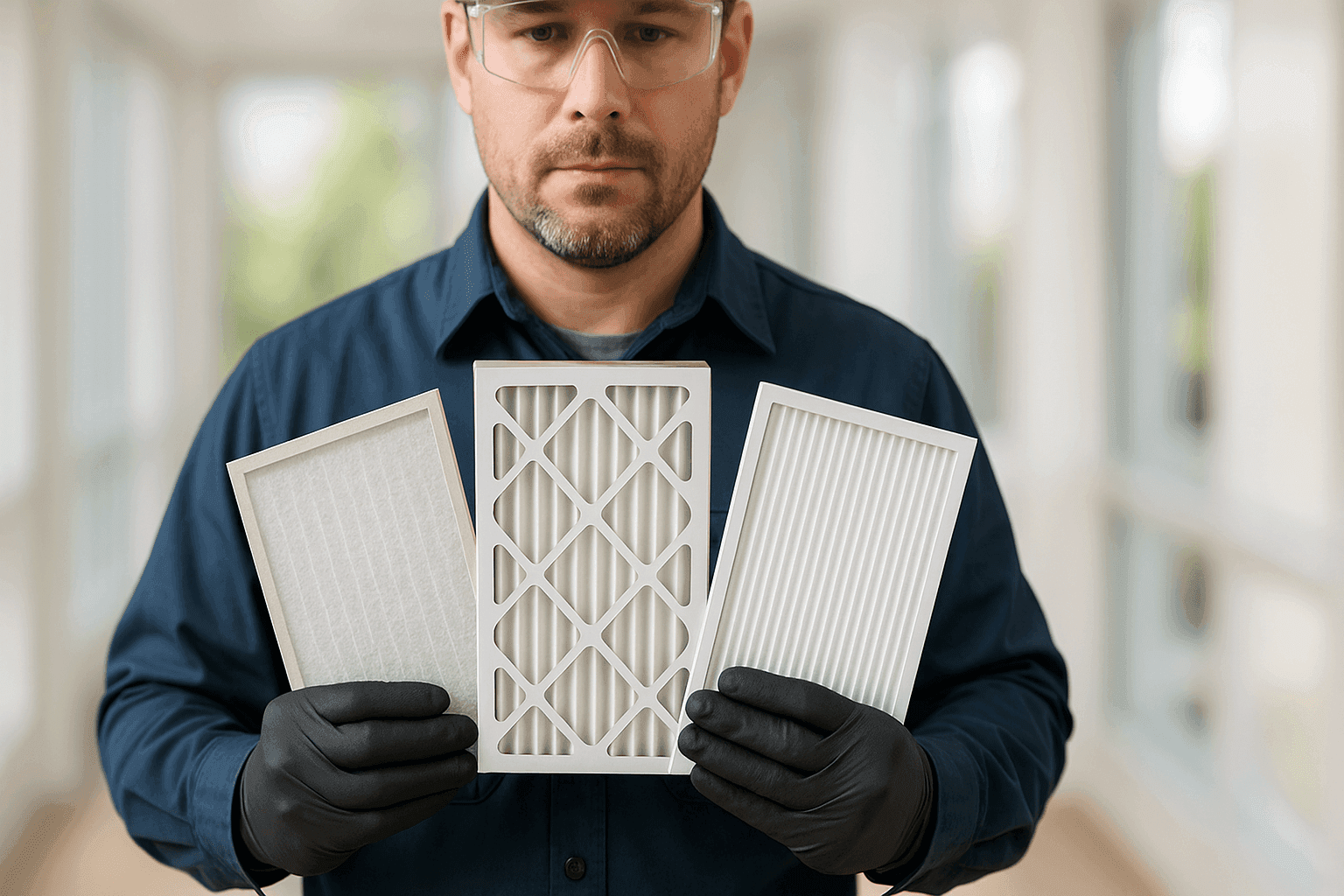
Ever tried running a marathon with a scarf over your mouth? That’s what your furnace or AC faces with a clogged or cheap filter. But not all filters are created equal. Here’s a breakdown of the main types you’ll find in homes and businesses:
Fiberglass Filters
- What they are: Thin, disposable, and inexpensive. Like a kitchen sponge for big dust bunnies.
- Pros: Cheap and easy to find. Protects the equipment from large debris.
- Cons: Doesn’t catch smaller particles—think pollen, pet dander, smoke, or bacteria.
Pleated Filters
- What they are: Made from folded synthetic material (like an accordion).
- Pros: Traps more dust, pollen, and even mold spores. Lasts longer than fiberglass.
- Cons: Slightly pricier, but the tradeoff is better air quality and system protection.
HEPA Filters
- What they are: High-Efficiency Particulate Air filters. These are the gold standard—used in hospitals and clean rooms.
- Pros: Captures 99.97% of particles 0.3 microns or larger. If you want nearly hospital-grade air, this is it.
- Cons: Not all HVAC systems can handle them; airflow may be restricted unless your system is built for HEPA.
Carbon Filters
- What they are: Packed with activated carbon. Think of them as odor magnets.
- Pros: Excellent for neutralizing smells (smoke, pets, cooking). Helps remove some gases and chemicals.
- Cons: Not as effective for dust or allergens. Often paired with other filter types.
Each type has a job—some catch visible dust, others tackle invisible threats. The right choice depends on your needs, from basic protection to serious allergy relief.
HVAC Filter Ratings Explained: What Do MERV, HEPA, and Numbers Mean?
If filter types are like vehicles, ratings are the speedometers. They tell you how much—and what size—junk a filter snags from your air.
MERV (Minimum Efficiency Reporting Value)
- Scale: 1 to 20 (higher = better filtration)
- What it means: Measures a filter’s ability to trap particles between 0.3 and 10 microns.
- Quick guide:
- MERV 1–4: Basic dust and lint (think window AC units)
- MERV 5–8: Pollen, mold, and pet dander (most homes)
- MERV 9–12: Fine dust, some bacteria (homes with allergies/pets)
- MERV 13–16: Smoke, bacteria, sneeze particles (medical, commercial)
- Above 16: HEPA territory (specialized systems)
Tip: Most residential systems work best with MERV 8–12. Go higher, and you risk choking airflow unless your system is designed for it.
HEPA
- Definition: Must remove at least 99.97% of airborne particles as small as 0.3 microns.
- Where used: Hospitals, labs, and homes with standalone HEPA air cleaners.
Carbon Filter Ratings
- Note: No universal number. Look for how much carbon is used and manufacturer specs for odor/gas removal.
What About Other Numbers?
Some brands use “FPR” or “MPR.” These are just marketing terms—stick with MERV or HEPA for apples-to-apples comparison.
How to Choose the Right HVAC Filter for Your Space
A filter isn’t one-size-fits-all. Consider these steps:
- Check Your System: What does your HVAC manual recommend? Oversized or undersized filters can cause problems.
- Think About Your Air: Allergies? Pets? Smokers? Go for MERV 10–13 or HEPA (if system allows).
- Energy Use: Higher MERV = more resistance. Too high, and your system strains—like running uphill with a heavy backpack.
- Budget: Pleated filters cost more than fiberglass, but last longer and protect better.
- Special Needs: Odors a problem? Add a carbon filter (often as a secondary filter).
Pro tip: If you’re ever unsure, a quick call to a professional can save you money and headaches. Or use our Filters near me guide for local support.
When Should You Replace Your HVAC Filter? ⏳
You wouldn’t drive your car for years without an oil change. Your HVAC filter is no different. Here are some easy rules of thumb:
- Fiberglass: Every 30 days.
- Pleated: Every 60–90 days.
- HEPA or Carbon: Check monthly, change every 6–12 months (but depends on use).
But…
- Pets, smokers, construction, or high pollen? Change more often.
- Can’t remember? Hold your filter up to a light. If you can’t see light through it, time for a swap.
Real-life sign: If your HVAC sounds like it’s working harder, or rooms feel dusty, don’t wait—replace it.
Health & System Benefits of Clean HVAC Filters
Changing your filter isn’t just busywork. It’s one of the biggest favors you can do for your lungs—and your wallet.
- Cleaner Air: Traps dust, pollen, pet dander, and even bacteria.
- Less Allergies: Reduces triggers for asthma and hay fever.
- System Efficiency: Keeps airflow strong, so your system doesn’t wear out early.
- Lower Bills: A clogged filter is like running with a blocked nose—your system burns more energy to keep up.
- Fewer Breakdowns: Dirt and dust are the enemy of motors and coils.
It’s a simple swap that pays off in health, comfort, and savings.
How to Change an HVAC Filter (and When to Call in the Pros) 🧰
Changing a filter is basic DIY for most systems, but there are a few things to keep in mind:
DIY Steps
- Turn Off the System: Safety first, always.
- Find the Filter Slot: Usually by the return duct or blower compartment.
- Check Filter Size: It’s printed on the old filter’s frame.
- Slide Out the Old Filter: Watch for dust—gloves help.
- Insert the New Filter: Arrows should point in the direction of airflow (toward the blower).
- Reset Any Timers: Some smart thermostats track filter changes.
When to Call Holmes Heating & Air
- Unsure what filter you need.
- System has special filters (HEPA, carbon, whole-house air scrubbers).
- Not comfortable opening panels or handling electrical components.
- See signs of mold or unusual debris in the filter area.
We’re here for annual HVAC maintenance or indoor air quality upgrades if you want deeper cleaning, duct service, or advanced filtration.
Quick Safety Checklist Before You Start
- Always power off your HVAC at the thermostat (and breaker, if possible).
- Wear gloves—old filters can be dusty or even harbor mold.
- Never force a filter that doesn’t fit perfectly.
- Double-check filter size before buying replacements.
- If you spot moisture, rust, or mold, stop and call a pro.
DIY vs. Call a Pro: What Makes Sense?
DIY:
- Standard filter swaps
- Comfort with basic tools
- No signs of damage or mold
Call a Pro:
- Unusual noises, smells, or airflow
- Advanced filters (HEPA, carbon, UV, or air scrubbers)
- Ductwork concerns or visible mold
- Unsure about filter size or location
Sometimes, what looks like a “simple” filter swap uncovers bigger issues—don’t hesitate to book a checkup.
What Pros Do On Arrival
When you call Holmes Heating & Air, here’s what you can expect:
- Inspect filter type, size, and fit
- Check for airflow issues, dust buildup, and return air leaks
- Test system operation (temperature, pressure, and airflow)
- Recommend the optimal filter for your system and lifestyle
- Offer solutions for indoor air quality if needed
We handle everything from routine swaps to advanced filtration system installation.
Prevention & Maintenance Tips
- Mark your calendar for regular filter changes—set a reminder.
- Keep the area around your HVAC unit clean and free of clutter.
- Consider an annual home energy audit to spot air leaks or duct issues.
- Upgrade to a higher MERV filter if you have allergies or pets, but only if your system supports it.
- Ask about whole-house air scrubbers or humidifiers for next-level air quality.
Costs & Time Factors
- Filter price: $5–$40+ (depends on type and size)
- DIY time: 5–10 minutes for most swaps
- Pro service: 30 minutes to an hour (includes full inspection)
Note: Advanced filters (HEPA, carbon) and custom sizes may cost more. Regular changes are still cheaper than repairing a stressed-out blower or replacing a burnt-out AC.
When It’s an Emergency 🚨
A clogged filter rarely causes true emergencies, but neglect can lead to:
- Complete loss of heating or cooling
- Icy coils or overheating
- Burning smells or unexplained noises
If your system suddenly shuts down or produces unusual smells, turn it off and call for 24-hour emergency service. Don’t risk your health or safety.
FAQ: Common HVAC Filter Questions
Q: Can I use the highest MERV filter I find?
A: Not always. Too much filtration restricts airflow, stressing your system. Check your HVAC manual or ask a professional.
Q: How do I know what size filter I need?
A: The size is printed on the filter’s edge. If it’s missing, measure the slot’s length, width, and depth.
Q: Are washable filters good?
A: They’re reusable, but may not filter as well as high-quality disposables. Follow manufacturer instructions carefully.
Q: Will a better filter fix my allergies?
A: It helps, but it’s only part of the solution. Pair with duct cleaning, regular maintenance, and other IAQ steps for best results.
Local & Seasonal Considerations
During pollen season or after storms, filters clog faster. In areas with wildfires or high pollution, you may need to swap filters more often. If you’ve recently remodeled or have heavy foot traffic, check monthly. Businesses—especially those with lots of visitors—should schedule regular filter checks as part of their AC maintenance plan.
Wrap-Up: Clean Filters, Healthy Air, Happy System
Changing your HVAC filter is a small task with big rewards. Whether you’re in a downtown office or a family home, the right filter protects your air, your equipment, and your peace of mind. Still have questions, or want to make sure you’re set up for success? Holmes Heating & Air is always here to help.
Call Holmes Heating & Air now — or reach us anytime at 888-835-0228 .